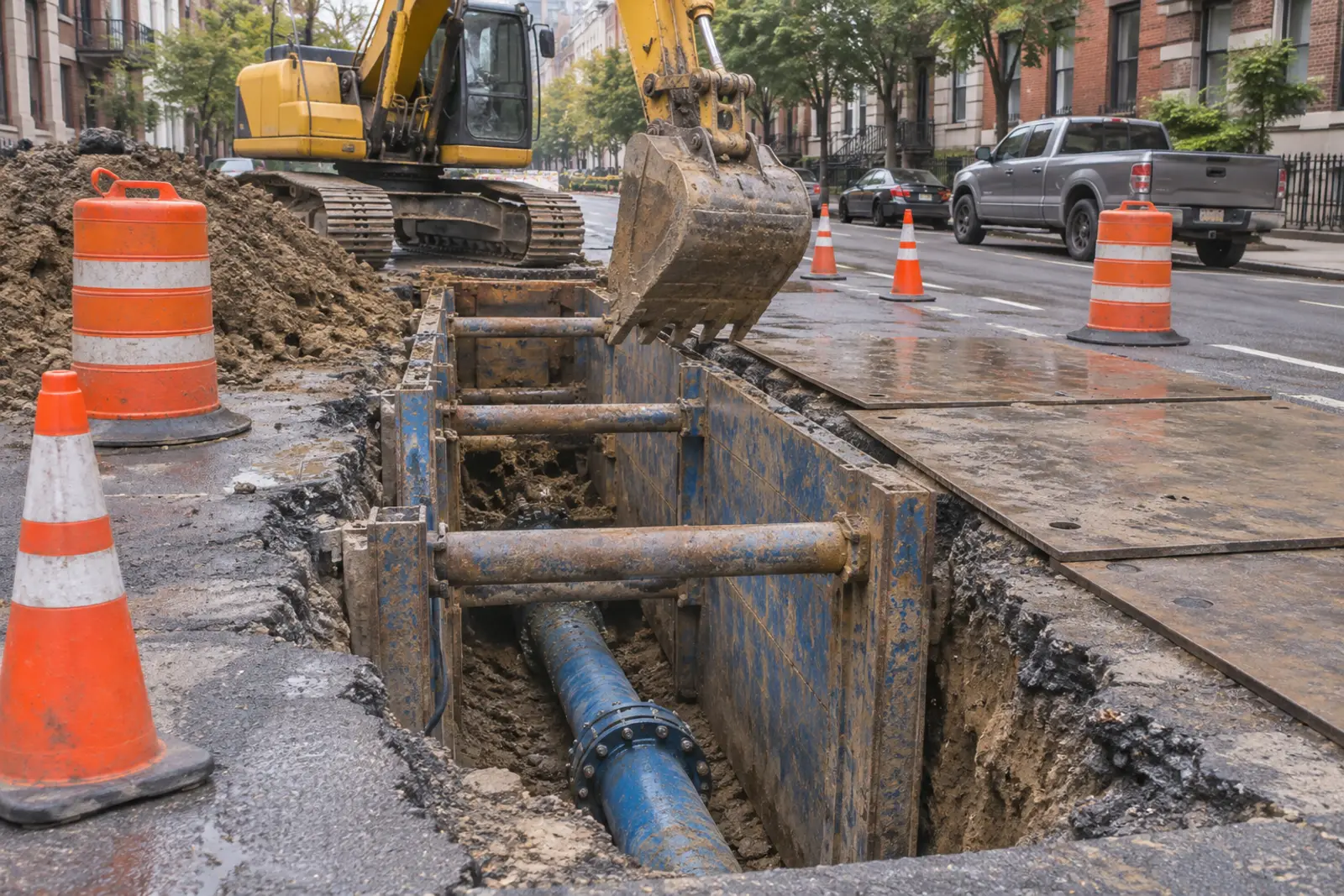
A fiber line that crosses a state-maintained road needs an encroachment agreement with NCDOT before anyone digs. How the crossing is built decides most of what goes in the package.
A fiber route rarely stays on one side of the road. Every time it crosses a road that NCDOT maintains, the crossing sits in the state's right-of-way and needs the state's written agreement first. The city or county permit, if there is one, does not cover it.
The first decision is how the line gets across. It shapes the drawings, the traffic control and the questions the reviewer will ask.
Bored crossings
A directional bore goes under the pavement without cutting it. Traffic keeps moving, and there is no pavement to restore. For those reasons it is the method reviewers usually expect on a paved state road.
The package has to show the bore, not only the route. Expect to provide a plan view and a profile with the depth under the pavement and under any ditch, the conduit size and material, and where the bore pits sit in relation to the edge of pavement. Pits and equipment on the shoulder still need traffic control.
Open cut crossings
An open cut trenches across the lanes. Reviewers ask why a bore is not possible, so say so plainly in the package: rock, existing utilities in the way, or a short unpaved section.
An open cut adds a pavement restoration detail, a plan for closing lanes in stages, and often steel plates and time limits on how long the trench may stay open. It is the slower of the two to get through review.
Decide bore or open cut before the drawings start. Changing it afterwards means a new package.
What the package usually contains
The agreement form signed by the utility owner. A route plan that shows the right-of-way lines and existing utilities. The crossing profile. A traffic control plan for the work zone. A locate ticket. Proof of insurance, and a bond if the district asks for one.
The utility owner signs the agreement and provides insurance. The plan, profile and traffic control plan are prepared and sealed by a licensed partner or your own design professional. We assemble the package, check it against the district's list, file it and follow it up.
District offices do not all ask for the same items. Check the current list with the district that covers the road before the drawings are finished.
Why crossings are sent back
The profile is missing or does not give a depth. The right-of-way line is not shown, so the reviewer cannot tell what is inside it. The traffic control plan is a generic sheet that does not match the road. The owner named on the agreement is the contractor and not the company that will own the line.
Each of these is a return and a new place in the queue. They are all visible before filing.
Many crossings on one route
A route with ten crossings is ten sets of the same documents. Draw them to one standard, number them, and file them in the order the crew will build them. In the client portal each crossing has its own status, so the crew can start on the ones that are issued.
Sample post