Two years after the storm, rebuilding in Asheville and Buncombe County still means more agencies, more stormwater review and more coordination than a normal job.
Hurricane Helene changed western North Carolina in September 2024. Roads washed out, water and sewer lines broke, and whole stream banks moved. The rebuilding is still going on, and it brings a permitting picture that is busier than normal: more applicants, more agencies and more attention to stormwater and floodplains.
Here is what we see on rebuilding jobs in Asheville and Buncombe County, and how to keep them moving.
Know which agency owns each piece
A single repair can touch the City of Asheville or Buncombe County, NCDOT on state roads, the water utility, the state's environmental agencies for streams and erosion control, and federal programs if public money is involved. Each one has its own permit and its own timeline.
Start by listing every piece of work: road, driveway, utility line, culvert, retaining wall, grading, stream bank. Then write the owner next to each one. That list becomes your permit plan.
Stormwater and erosion control come first
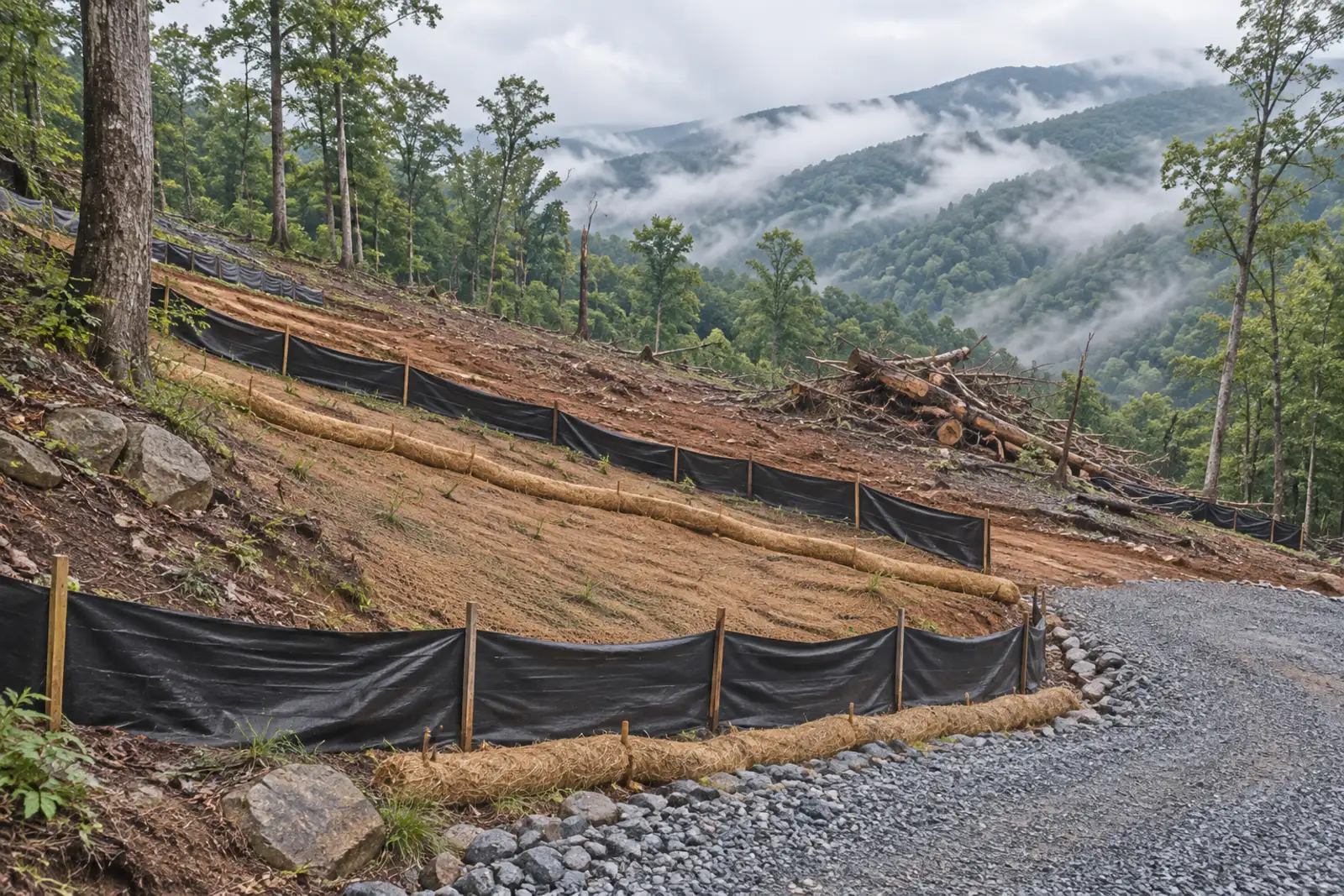
Disturbing land above the local threshold needs an erosion and sedimentation control plan, and larger jobs need coverage under the state's construction stormwater permit. After Helene, reviewers look closely at how runoff leaves the site and where it ends up. A plan that shows drainage areas, outlets, silt fence, inlet protection and stabilization by phase moves faster than one that shows a generic detail sheet.
If the site is in or near a mapped floodplain, expect floodplain development review as well. Flood maps in the region are being updated, so confirm which map the jurisdiction is using today.
After a flood, every reviewer is looking at water. Show where it goes before they have to ask.
Utilities and the right-of-way
Many rebuilding jobs replace or relocate water, sewer and drainage lines in the street. On a state road that means an NCDOT encroachment agreement before the city or county permit. On a city street it means the right-of-way permit, a traffic control plan and a restoration standard for the pavement you cut.
Coordinate with the utility early. Utilities are rebuilding their own systems and may already have work planned on the same block. Finding that out before you file saves a redesign.
Paperwork for public money
If the job is funded by FEMA, HUD or state recovery programs, the permits are only part of the file. Those programs ask for their own environmental and historic reviews, procurement records and photos. Keep the permit documents organized so the same set can serve both reviews.
How to keep it moving
Build the schedule around the slowest approval, which is often stormwater or NCDOT. File complete packages, because reviewers are carrying heavy loads and a returned package goes to the back of the line. And keep one person responsible for tracking every agency, so nothing waits on a question nobody saw.
Sample post