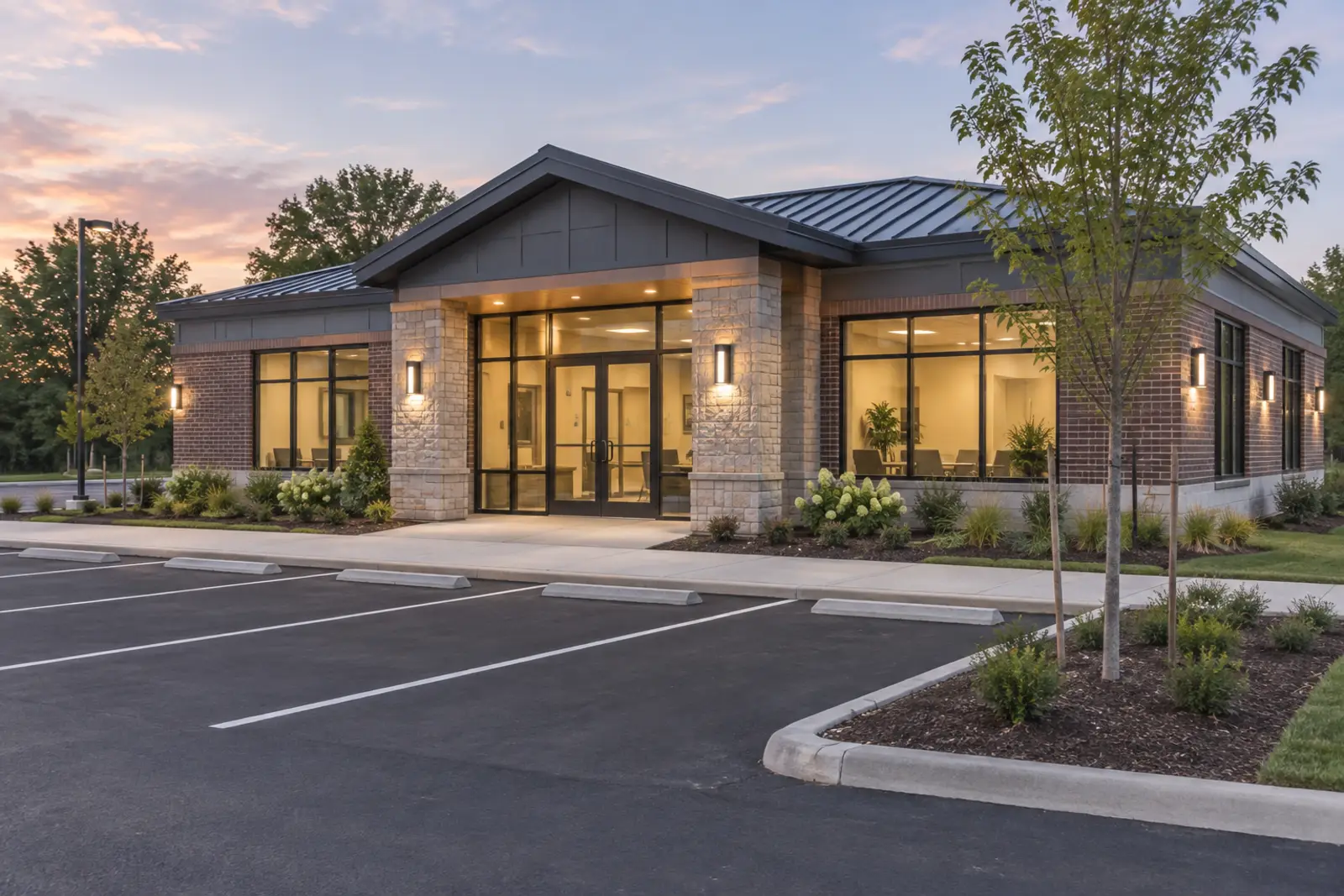
The building is finished, the tenant wants the keys, and the certificate is still weeks away. Here is what stands between the last punch-list item and occupancy.
A certificate of occupancy, or CO, says a building can be used for its intended purpose. A temporary certificate of occupancy, or TCO, lets people move in for a limited time while some items are still open. Both depend on far more than the building inspection, and that is where schedules slip at the end of a job.
Every permit must be closed
A commercial project can carry a dozen permits: building, electrical, plumbing, mechanical, fire alarm and sprinklers, signs, right-of-way, driveways, utility connections, stormwater and erosion control, tree protection. The CO usually waits until every one of them has its final inspection. A forgotten sidewalk permit from the first month can hold up the last week.
Keep a single list of every permit and its status from the day the job starts. At closeout, that list is the plan.
The sign-offs outside the building
Before a CO, most jurisdictions want sign-offs from departments that never walked through the building: public works for the right-of-way and utilities, the utility for water and sewer acceptance, stormwater for the as-built drawings and the release of erosion control, zoning for site work such as parking, landscaping and lighting, and fire for access and hydrants. On a state road, NCDOT may need to accept the driveway and any work in its right-of-way.
These sign-offs often need documents: as-built surveys, test reports, warranty bonds, recorded easements and final plats. Order them early. A survey crew is booked weeks out.
Closeout starts on the first day of the job, not the last. Every permit you open is one you will have to close.
When a TCO makes sense
A TCO is useful when the building is safe to occupy but some items cannot be finished yet, such as final paving, landscaping in the wrong season or a sidewalk waiting for a utility. Jurisdictions usually require that life-safety systems are complete and approved, and many ask for a list of open items, a completion date and sometimes a bond or a fee.
A TCO has an expiration date. Treat it as a deadline, not a finish line, because an expired TCO can put the owner in a worse position than no TCO at all.
Run the punch list like a permit
Walk the site with each inspector's checklist before you call for the final, not after. Fix what you find, photograph it, and only then schedule the inspection. A failed final inspection costs days of rescheduling.
How we handle closeout
We keep the permit list from day one, schedule finals in the order that clears the most sign-offs, collect the closeout documents each department needs, and follow up until the certificate is issued. Sarah has taken about 1,500 projects from permit to CO; most of what she checks at closeout was decided in the first month.
Sample post