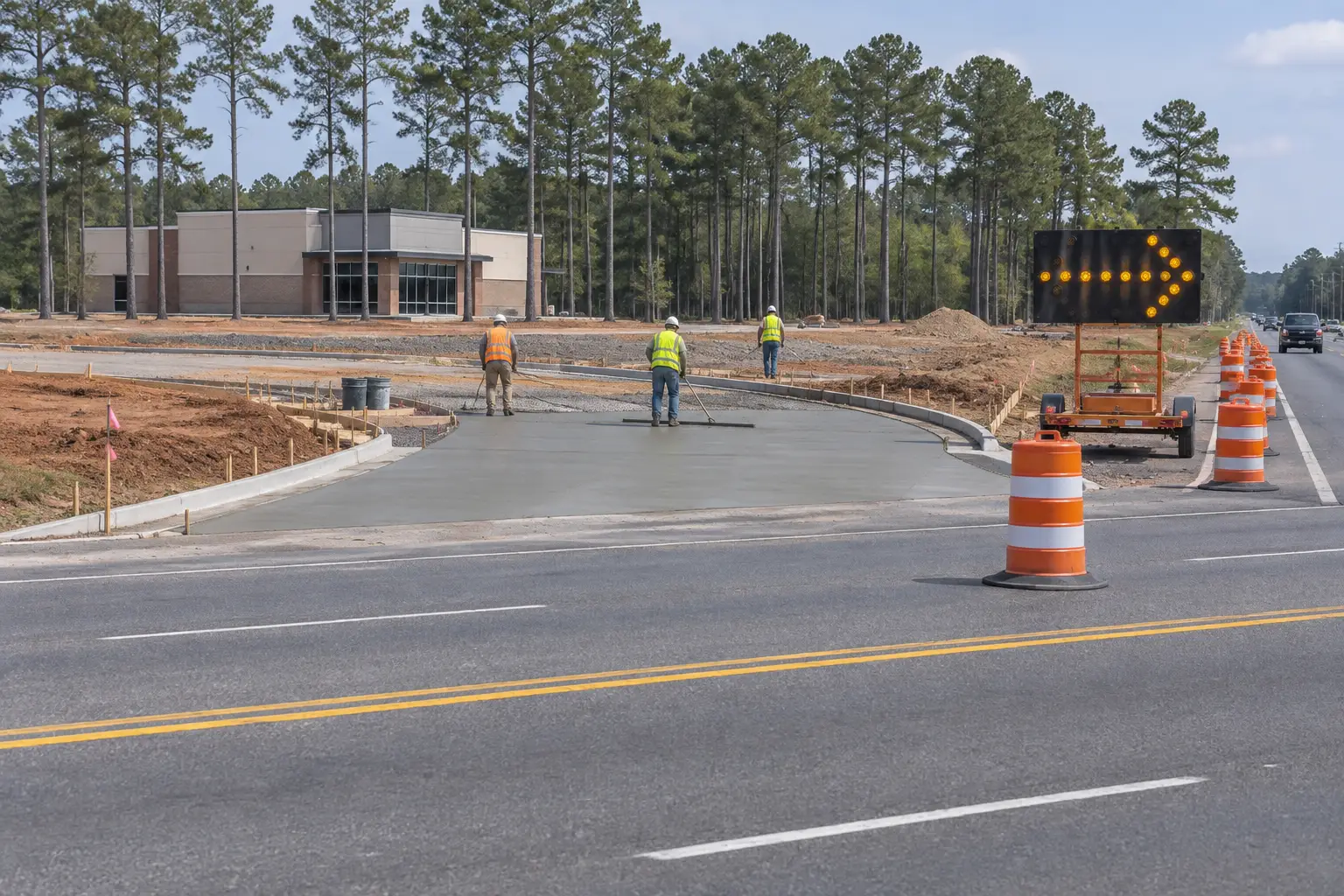
Lane closures, sidewalk closures and work zones all need a traffic control plan. Most returned plans miss the same handful of items.
A traffic control plan, often called a maintenance of traffic or MOT plan, shows how cars, bikes and people on foot will get past your work zone safely. In Raleigh, as in most North Carolina cities, it is required for work that closes or narrows a lane, closes a sidewalk or puts equipment in the street. It is also one of the documents most often sent back.
This is a general checklist from the packages we see, not the city's own list. Always check the current requirements for the street and the work.
Start from the standard
Plans in North Carolina follow the federal Manual on Uniform Traffic Control Devices and NCDOT's supplements and standard drawings. Reviewers like to see a plan that names the typical application it is based on and then adapts it to the actual street. A plan that invents its own layout invites questions.
The items reviewers look for
Location and limits: the street name, the block, the exact start and end of the work zone, and a north arrow. A plan that cannot be placed on a map is returned.
Existing conditions: lane widths, number of lanes, posted speed, parking, bike lanes, bus stops, driveways and crosswalks inside or near the zone. Speed drives sign spacing and taper length, so it must be stated.
Devices and spacing: every sign, cone, drum and barricade, with the distances between them and the taper lengths. Advance warning signs need to be far enough ahead for the posted speed.
Pedestrians: if a sidewalk is closed, show the detour route, the accessible crossing and the signs at each end. Missing pedestrian accommodation is one of the most common comments.
Schedule: the days and hours of the closure. Many corridors restrict work during peak hours or special events.
Flaggers and contact: if flaggers are used, show their positions, and give a responsible contact who can be reached while the zone is set up.
A reviewer reads a traffic control plan the way a driver will meet it: from the first sign to the last. Draw it that way.
Small details that cost a round
Driveways inside the work zone need access or a stated plan for when they will be blocked. Bus stops need coordination with the transit agency. Signals near the zone may need a timing change or an officer. And if the street is state-maintained, the plan may need NCDOT review as well as the city's.
Reviewers also notice plans copied from another job. A plan with the wrong street name in the title block, or a speed that does not match the road, tells the reviewer to look harder at everything else.
How we prepare it
We walk or photograph the street, confirm the posted speed and the maintaining agency, pick the typical application, and draw the plan to the actual lane widths and driveways. Then we check it against the list above before it is filed. Where the work needs a sealed plan, a licensed partner prepares and seals it.
Sample post