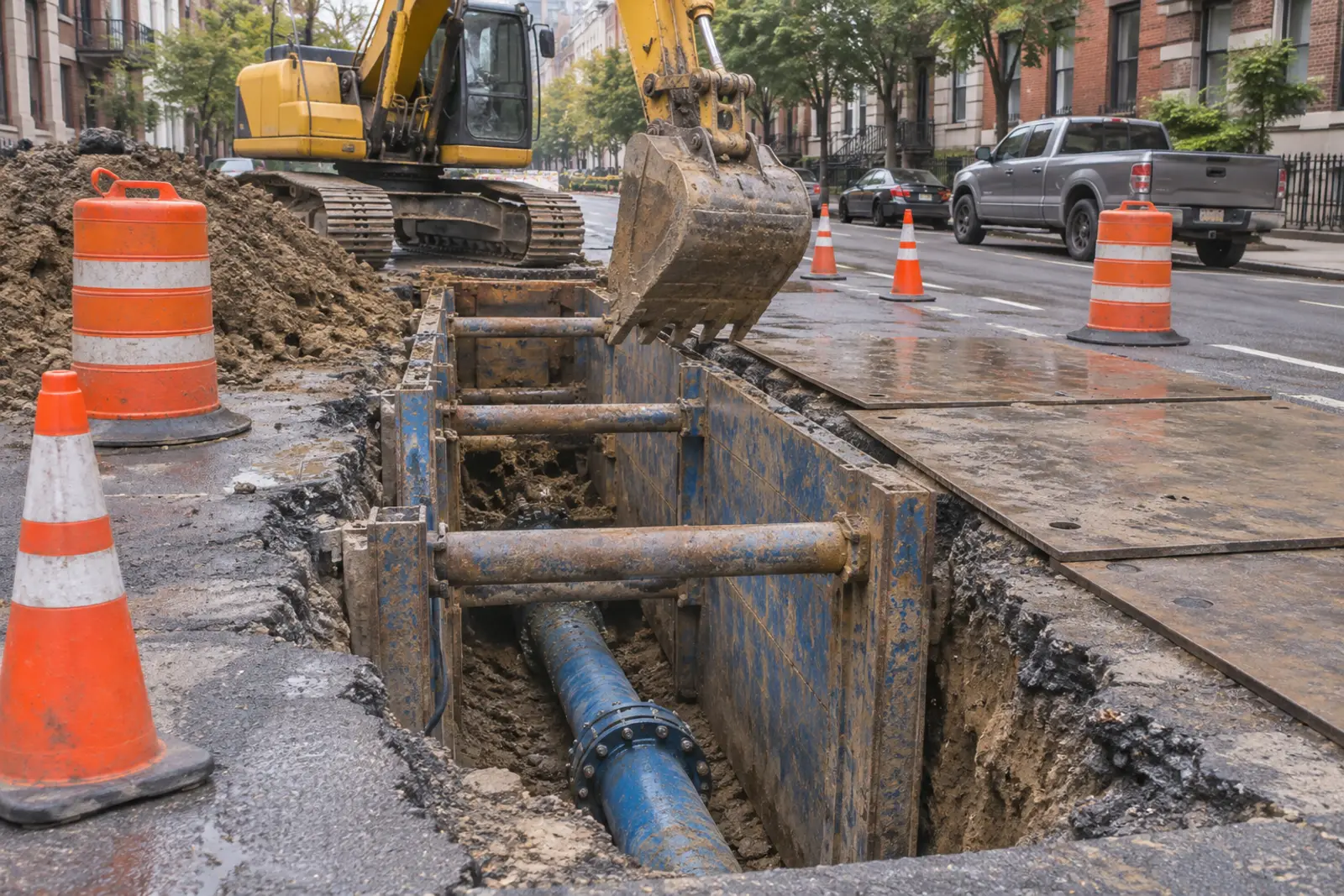
Water and sewer connection in the City of Raleigh
Last verified November 13, 2026 · Reviewed by Sarah Johnson
Sample photo
- Agencies
- 2
- Typical weeks (sample)
- 4–10
- Documents
- 5
- Inspections
- 2
- Last checked
- November 13, 2026
Short answer
Yes. Connecting a building to the public water or sewer main needs a connection permit and the tap and capacity fees paid. Work in the street also needs a right-of-way cut permit.
Agencies, in order
- NCDOT: encroachment agreement (state roads only)State road only
- City of Raleigh: water and sewer connection permit
Documents checklist
PreparedForYes1
- Water and sewer availability letter request (the utility issues it)
You1
- Contractor licence and insurance certificate
Your design professional of record1
- Fixture count for meter sizing
Licensed partner2
- Utility plan with service sizes and tap locations
- Traffic control plan for work in the street
Steps
- Confirm availability and the main size at the property.
- Size the meter from the fixture count.
- File the connection application with the utility plan.
- Pay the fees and get the right-of-way cut permit for the street work.
- Install, test and set the meter.
Inspections
- Service line and cleanout before backfill
- Meter set and final
Fees, reviewer comments and sources
Fees
- Tap fee by service sizeSource: City of Raleigh: water and sewer connections[$___]
- Capacity feeSource: City of Raleigh: water and sewer connections[$___]
Common reviewer comments
- Meter size does not match the fixture count.
- Show the sewer cleanout at the right-of-way line.
Sources
- City of Raleigh: water and sewer connections · checked November 13, 2026
Example content, not verified. Fees stay as [$___] until checked against the agency's current schedule.